
 RU
RU KZ
KZ EN
ENSwitching
High-performance Layer 2/Layer 3 connectivity for users, servers, access points, cameras, phones and other devices inside enterprise sites.
Discuss a project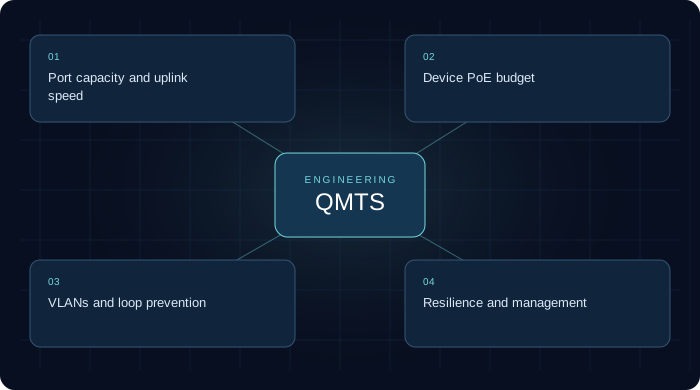
What it is
Enterprise switching provides port connectivity, VLAN segmentation, uplinks, PoE, redundancy and policy enforcement at the campus or data-center edge.
Why it matters
Switching design directly affects availability, throughput, segmentation, endpoint connectivity and the ability to troubleshoot the network.
What shapes the design
- Port capacity and uplink speed
- Device PoE budget
- VLANs and loop prevention
- Resilience and management
QMTS delivery scope
We define access/distribution roles, VLANs, uplinks, stacking or redundancy, PoE requirements and management standards, then configure and test the switching environment.
Customer deliverables
A standardized switching fabric with documented VLANs, trunks, uplinks, redundancy and management access.
Typical use cases
Offices, campuses, warehouses, retail sites, server rooms and data-center access networks.
Delivery lifecycle
- 01 Requirements discovery and current-state assessment.
- 02 Architecture, dependencies and implementation planning.
- 03 Technical specification, configuration baseline and delivery preparation.
- 04 Implementation, integration, testing and controlled commissioning.
- 05 As-built documentation, operational handover and managed support where required.
Before we start
To scope a project, describe the goal, users and sites, current systems, timing constraints and desired outcome. Solution scope and service terms are defined after assessment.
Start with your challenge
Tell us what you need to build, connect or improve. An idea, a list of issues or a technical brief is enough to start.
Support coverage and SLA parameters are agreed for each project.
Discuss a project
Leave an email address or phone number so we can respond.