 RU
RU KZ
KZ EN
ENInfrastructure monitoring
Continuous visibility into the availability, health and performance of network and infrastructure components.
Discuss a project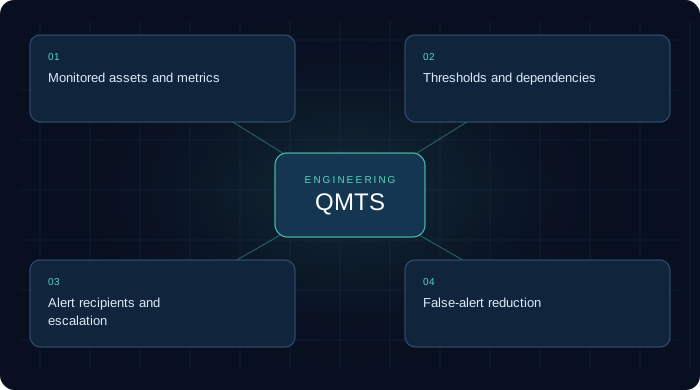
What it is
Monitoring platforms collect device and service telemetry, status and events to identify outages, degradation and capacity issues.
Why it matters
Early detection reduces mean time to repair and gives operations teams evidence for capacity planning, SLA reporting and root-cause analysis.
What shapes the design
- Monitored assets and metrics
- Thresholds and dependencies
- Alert recipients and escalation
- False-alert reduction
QMTS delivery scope
We define monitored assets and thresholds, integrate telemetry, configure alerts and dashboards, establish escalation paths and tune the monitoring model over time.
Customer deliverables
A monitored environment with dashboards, actionable alerts, operational thresholds and agreed escalation procedures.
Typical use cases
Networks, WAN links, servers, virtual infrastructure, security devices and business-critical sites.
Delivery lifecycle
- 01 Requirements discovery and current-state assessment.
- 02 Architecture, dependencies and implementation planning.
- 03 Technical specification, configuration baseline and delivery preparation.
- 04 Implementation, integration, testing and controlled commissioning.
- 05 As-built documentation, operational handover and managed support where required.
Before we start
To scope a project, describe the goal, users and sites, current systems, timing constraints and desired outcome. Solution scope and service terms are defined after assessment.
Start with your challenge
Tell us what you need to build, connect or improve. An idea, a list of issues or a technical brief is enough to start.
Support coverage and SLA parameters are agreed for each project.
Discuss a project
Leave an email address or phone number so we can respond.