
 RU
RU KZ
KZ EN
ENIncident management
A structured process for restoring normal service as quickly as practical after an unplanned interruption or degradation.
Discuss a project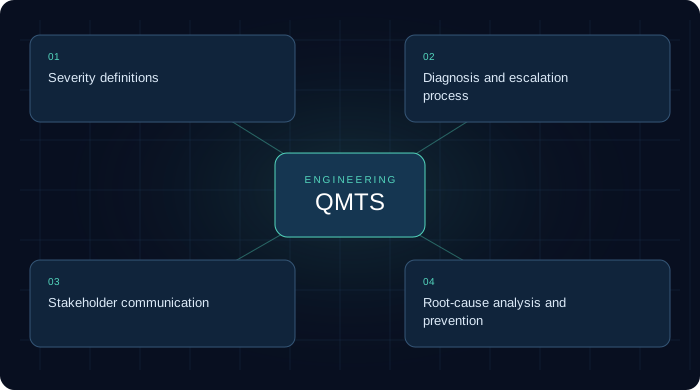
What it is
Incident Management covers detection or intake, prioritization, diagnosis, escalation, restoration and communication through the incident lifecycle.
Why it matters
It reduces operational disruption by ensuring critical issues receive the right priority, ownership and escalation.
What shapes the design
- Severity definitions
- Diagnosis and escalation process
- Stakeholder communication
- Root-cause analysis and prevention
QMTS delivery scope
We classify incidents by impact and urgency, coordinate technical response, communicate status, restore service and document resolution and follow-up actions.
Customer deliverables
A traceable incident record, restored service, escalation history and resolution information.
Typical use cases
Managed networks, infrastructure services, service desks and environments operating under SLA commitments.
Delivery lifecycle
- 01 Requirements discovery and current-state assessment.
- 02 Architecture, dependencies and implementation planning.
- 03 Technical specification, configuration baseline and delivery preparation.
- 04 Implementation, integration, testing and controlled commissioning.
- 05 As-built documentation, operational handover and managed support where required.
Before we start
To scope a project, describe the goal, users and sites, current systems, timing constraints and desired outcome. Solution scope and service terms are defined after assessment.
Start with your challenge
Tell us what you need to build, connect or improve. An idea, a list of issues or a technical brief is enough to start.
Support coverage and SLA parameters are agreed for each project.
Discuss a project
Leave an email address or phone number so we can respond.