
 RU
RU KZ
KZ EN
ENCloud infrastructure
On-demand compute, storage, networking and platform resources delivered through public, private or hybrid cloud operating models.
Discuss a project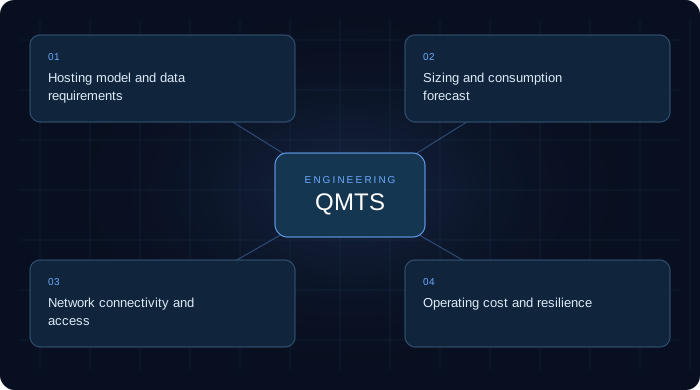
What it is
Cloud infrastructure provides software-defined resources that can be provisioned and scaled without tying each workload directly to dedicated physical hardware.
Why it matters
It can improve agility and scalability, but successful adoption requires architecture for connectivity, security, identity, cost and workload dependencies.
What shapes the design
- Hosting model and data requirements
- Sizing and consumption forecast
- Network connectivity and access
- Operating cost and resilience
QMTS delivery scope
We assess workload suitability, design the target cloud or hybrid architecture, plan connectivity and security, coordinate migration and establish an operational model.
Customer deliverables
A cloud or hybrid platform aligned with workload, security, connectivity, resilience and management requirements.
Typical use cases
Application hosting, infrastructure modernization, hybrid IT, disaster recovery, development environments and scalable digital services.
Delivery lifecycle
- 01 Requirements discovery and current-state assessment.
- 02 Architecture, dependencies and implementation planning.
- 03 Technical specification, configuration baseline and delivery preparation.
- 04 Implementation, integration, testing and controlled commissioning.
- 05 As-built documentation, operational handover and managed support where required.
Before we start
To scope a project, describe the goal, users and sites, current systems, timing constraints and desired outcome. Solution scope and service terms are defined after assessment.
Start with your challenge
Tell us what you need to build, connect or improve. An idea, a list of issues or a technical brief is enough to start.
Support coverage and SLA parameters are agreed for each project.
Discuss a project
Leave an email address or phone number so we can respond.