
 RU
RU KZ
KZ EN
ENIT systems migration
A controlled transition of workloads, services or infrastructure from an existing environment to a new platform with managed risk and downtime.
Discuss a project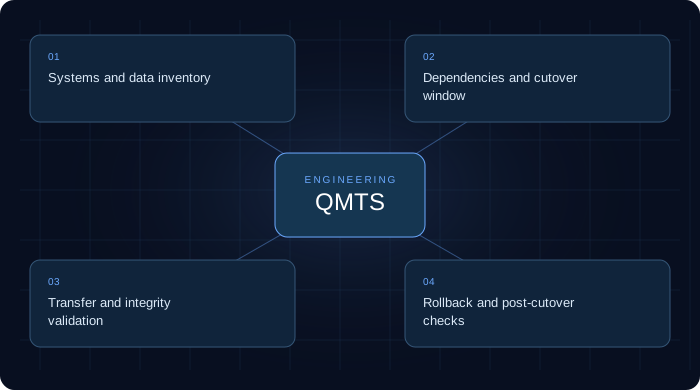
What it is
Migration may involve servers, virtual machines, applications, data, networks or cloud platforms and requires dependency and cutover planning.
Why it matters
Without structured planning, migrations can introduce outages, performance problems, broken integrations and unexpected rollback requirements.
What shapes the design
- Systems and data inventory
- Dependencies and cutover window
- Transfer and integrity validation
- Rollback and post-cutover checks
QMTS delivery scope
We assess dependencies and compatibility, define the migration wave plan and rollback strategy, prepare target infrastructure, execute migration and validate service after cutover.
Customer deliverables
A migrated workload or platform with validated functionality, documented cutover results and an agreed operational handover.
Typical use cases
Data-center refreshes, virtualization changes, cloud adoption, hardware lifecycle projects and platform consolidation.
Delivery lifecycle
- 01 Requirements discovery and current-state assessment.
- 02 Architecture, dependencies and implementation planning.
- 03 Technical specification, configuration baseline and delivery preparation.
- 04 Implementation, integration, testing and controlled commissioning.
- 05 As-built documentation, operational handover and managed support where required.
Before we start
To scope a project, describe the goal, users and sites, current systems, timing constraints and desired outcome. Solution scope and service terms are defined after assessment.
Start with your challenge
Tell us what you need to build, connect or improve. An idea, a list of issues or a technical brief is enough to start.
Support coverage and SLA parameters are agreed for each project.
Discuss a project
Leave an email address or phone number so we can respond.