
 RU
RU KZ
KZ EN
ENNetwork segmentation
Dividing an enterprise network into controlled security zones to limit unnecessary access and reduce the impact of compromise.
Discuss a project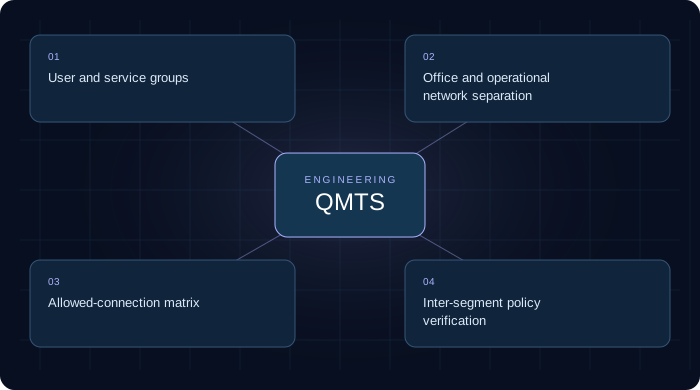
What it is
Segmentation separates users, servers, guests, IoT/OT systems and sensitive services using VLANs, routing boundaries, firewalls, ACLs or other policy controls.
Why it matters
It reduces lateral movement, clarifies trust boundaries and allows security policy to follow business and risk requirements.
What shapes the design
- User and service groups
- Office and operational network separation
- Allowed-connection matrix
- Inter-segment policy verification
QMTS delivery scope
We identify asset groups and traffic flows, define zones and policy, implement enforcement points and validate that required communication works while unnecessary paths are blocked.
Customer deliverables
A segmented network with documented zones, permitted flows and enforcement policy.
Typical use cases
Corporate campuses, data centers, guest networks, IoT/OT environments, regulated systems and multi-tenant infrastructure.
Delivery lifecycle
- 01 Requirements discovery and current-state assessment.
- 02 Architecture, dependencies and implementation planning.
- 03 Technical specification, configuration baseline and delivery preparation.
- 04 Implementation, integration, testing and controlled commissioning.
- 05 As-built documentation, operational handover and managed support where required.
Before we start
To scope a project, describe the goal, users and sites, current systems, timing constraints and desired outcome. Solution scope and service terms are defined after assessment.
Start with your challenge
Tell us what you need to build, connect or improve. An idea, a list of issues or a technical brief is enough to start.
Support coverage and SLA parameters are agreed for each project.
Discuss a project
Leave an email address or phone number so we can respond.